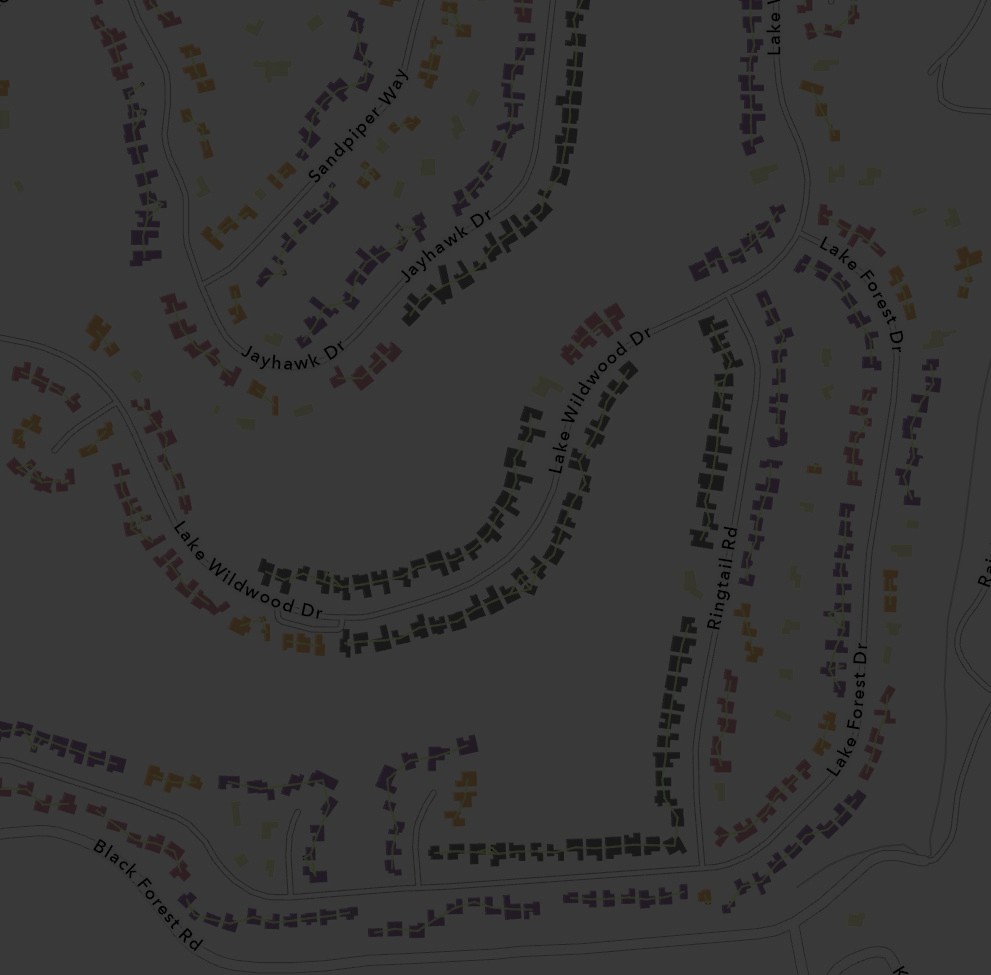
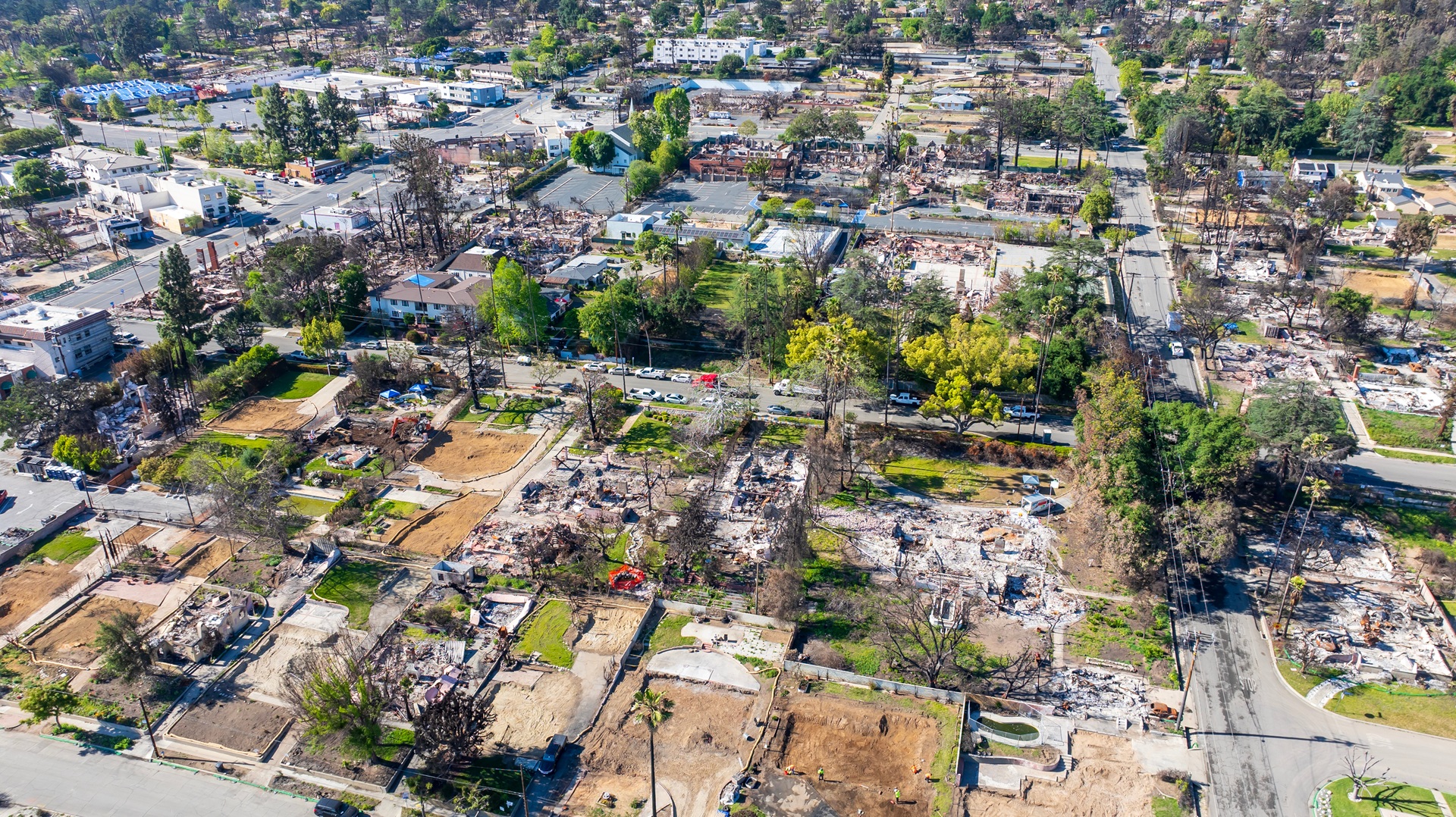
Across the West, communities in high-risk wildfire zones are facing unattainable insurance premiums. In many western states, insurance companies are dropping coverage altogether, leaving a growing number of homeowners only one option: state run FAIR Plans, or insurance of last resort, often high in cost and limited in coverage. In a push to return to more tenable premiums, communities are taking a data-driven approach to measure and reduce wildfire risk, in the hopes that insurers will reward their efforts. One example is Tyrolian Village, an HOA of 228 homes in Incline Village, Nevada whose homeowners face astronomical insurance costs, and where there is no state-run insurance of last resort or FAIR Plan.
The New York Times recently spotlighted Tyrolian Village’s efforts to use state-of-the-art technology from Vibrant Planet and BurnBot to prioritize, plan, and implement treatments – projects like clearing vegetation and hardening homes – that would have the most impact on wildfire risk. After treatment, Vibrant Planet provided Tyrolian Village with quantified impacts of these risk reduction efforts and built a Community Wildfire Resilience Progress Report that gave community members a cohesive, ongoing risk reduction plan with clear ROI on current and proposed treatments. This information helped to unlock affordable insurance for homeowners in the HOA, many of whom had no option for insurance at all.
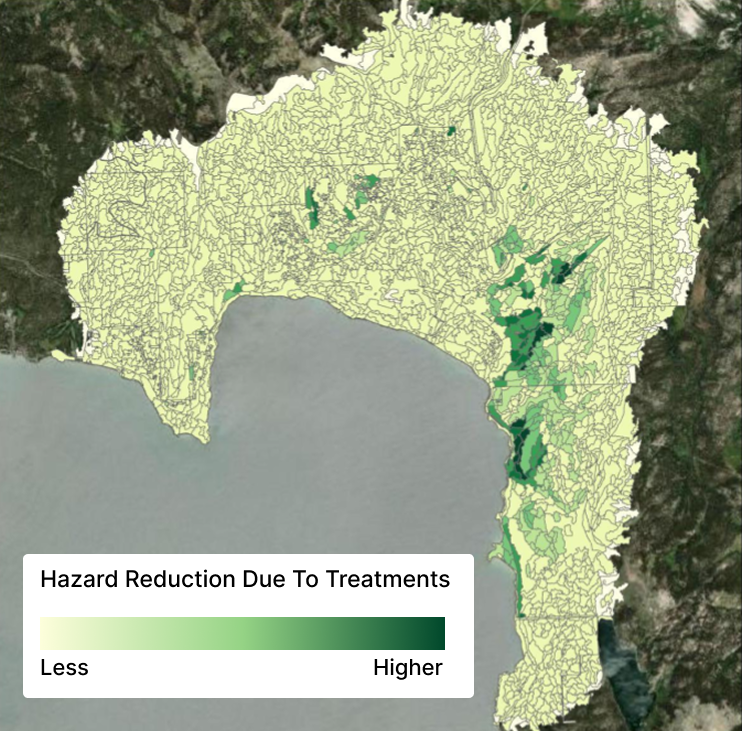
The Community Resilience Report highlighted that, in one area of the HOA, wildland fuels mitigation work including hand thinning and mastication moved an estimated 62% of the most highly exposed structures into lower risk categories. In other words, 104 of 169 homes in the neighborhood reduced their wildfire risk, adding up to $62 million in potential avoided losses. In another part of the HOA, wildfire risk dropped 40% and structure exposure declined 23%. Across Incline Village, 189 structures moved out of the highest exposure category, with $113 million in projected avoided losses. These concrete numbers are powerful tools to support conversations between insurers and homeowners.
The New York Times piece underscores the importance of getting communities to act together to achieve “herd immunity” to wildfire. As more homeowners invest in hardening and vegetation clearing, community resilience increases and insurers will build more confidence that their business models work in fire prone landscapes like the Western U.S., Mediterranean Europe, and parts of Australia and Latin America.
At Vibrant Planet, we recognize that collective action requires more than awareness, it requires credible, localized data that makes visible where the risk lies, comprehensively across communities and surrounding wildlands; and identifies who needs to be mobilized, down to the parcel scale, to reduce that risk. Our platform is used across the country to support a comprehensive view of wildfire risk, and the design of prioritized, actionable plans to address risk across communities and surrounding wildlands. If you’re interested in generating a Community Wildfire risk reduction analysis for your community, reach out to us here.


.png)



.png)